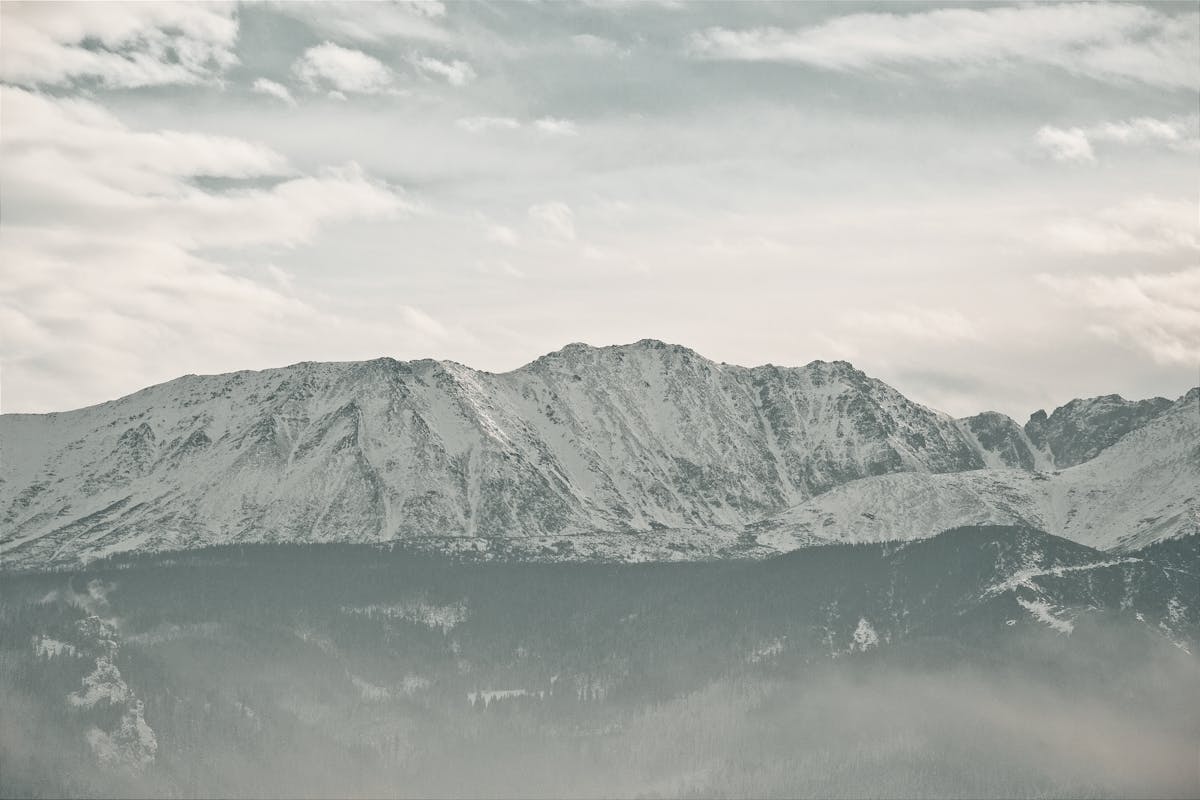
The White Valley: A Local Favorite for Silence
Dolina Białego (The White Valley) is arguably the most picturesque short walk originating directly from the town of Zakopane.
Unlike the massive, sprawling glacial valleys like Chochołowska or Kościeliska, this valley is a deep, narrow V-shaped gorge carved directly into the dolomite bedrock. Its accessibility makes it perfect for a relaxed family afternoon. The trail gently follows the winding **Biały Potok** (White Stream), which tumbles over countless miniature waterfalls and creates deep, crystal-clear pools that shimmer with a distinct turquoise hue. Because the valley floor is thickly covered by a mixed forest of beech and fir, it provides a profoundly cooling shade—making it the ideal escape during hot July and August afternoons.
1. Microclimate Magic: Nature's Air Conditioning
Dolina Białego maintains a unique microclimate that sets it apart from the surrounding areas. Because the corridor is so narrow and deep, direct sunlight only reaches the valley floor for a few hours a day. This creates a "thermal inversion" effect where the temperature here can be a delightful 5–8 degrees cooler than the bustling streets of Zakopane just a kilometer away. For travelers from warmer climates, this valley feels like entering a natural, refrigerated sanctuary filled with the scent of damp moss, ferns, and ancient pine needles. It is the best place to hike on a humid August afternoon when the high peaks are obscured by summer haze.
2. Dark History: The Secret Soviet Uranium Mine
Despite its serene beauty today, Dolina Białego hides a fascinating chapter of Cold War history. In the early 1950s, Soviet geologists discovered traces of uranium ore within the valley's dolomite walls. Between 1950 and 1955, the entire area was cordoned off as a "Top Secret" zone and put under heavy military guard. Special teams were brought in to dig several deeply penetrating horizontal mining shafts directly into the rock to extract radioactive material for the Soviet nuclear program.
The mining was done in total silence—locals were told it was "experimental geology." Fortunately, the uranium veins proved too poor for large-scale exploitation, and the operation was abruptly abandoned in 1955. Today, the entrance to **"Sztolnia 3"** can still be seen near the main trail. It is sealed with a heavy iron grate, but you can feel the cold, damp air emanating from the depths of the mountain—a stark reminder of the era's geopolitical paranoia. It is a favorite spot for history buffs and curious children wanting to see a "secret spy cave."
3. Geology: The White Dolomite and the Turquoise Pools
The valley derives its name from the brilliant white color of the Triassic dolomite rock that makes up the streambed and cliffs. Dolomite is a harder cousin of limestone, and because it contains magnesium, it creates a unique chemical environment for the water. The **Biały Potok** (White Stream) is so chemically pure and saturated with mineral particles that it reflects light differently, creating deep, crystal-clear pools that shimmer with a distinct turquoise or "alpine blue" hue. Thousands of years of water erosion have carved the stream bed into a series of potholes and "natural jacuzzis" that are mesmerizing to watch as you walk along the wooden footbridges.
This trail is the most "low-friction" option for Muslim families seeking a true mountain experience without the physical toll of a high peak.
- Privacy in the Forest: The constant, roaring sound of the White Stream provides an acoustic shield that ensures total privacy. Just past the sealed Soviet mine, the trail opens into small, mossy clearings under the beech trees. These serve as perfect "natural prayer rooms" where you can perform Salah in peace while surrounded by the beauty of the creation.
- Pure Water Wudhu: The water in the pools near the bridges is exceptionally clean and accessible. Performing Wudhu with this cold, mineral-rich mountain water is a spiritually cleansing experience that prepares you perfectly for prayer in the forest.
- The Morning Window: To experience the valley at its most spiritual, enter the trail before 9:00 AM. At this hour, the morning mist still clings to the stream, and the light filtering through the high canopy creates "God rays" that make the entire valley feel like a sacred space.
4. Wildlife: The Fire Salamander and the Dipper
Because the valley floor is consistently damp and cool, it is the primary habitat for the **Fire Salamander** (*Salamandra plamista*). These striking black amphibians with bright yellow spots can often be seen crawling slowly over the mossy rocks after a light morning rain. In the stream itself, look for the **White-throated Dipper** (*Pluszcz*). This remarkable bird is the only passerine that can actually "walk" underwater along the stream bed to forage for aquatic insects—a fascinating sight for nature photographers.
5. Navigation: The Grand Loop Connection
You do not have to turn around. At the upper end of the valley, the yellow trail connects directly to the *Ścieżka nad Reglami*. By turning right (west) onto the black trail, you can hike upward for 40 minutes to reach the spectacular viewpoint of **Sarnia Skała**. This transforms a simple 2-hour valley walk into a highly rewarding 4-5 hour loop that finishes in the Strążyska Valley, combining the serene forest stream of Dolina Białego with the massive alpine panoramas of the Giewont massif.
6. Safety: The Damp Stone Factor
The main challenge in Dolina Białego is the moisture. The dolomite rocks and wooden bridges are often coated in a fine layer of mist from the stream, making them incredibly slippery. Wear trail shoes or hiking boots with a good grip (Gore-Tex is recommended due to the humidity). Also, be aware that the valley is a strictly protected nature reserve—staying on the marked path is essential to protect the fragile mosses and rare orchid species that grow along the stream bed.
Local Secret
While everyone stops at the waterfall at the end, the real magic is exactly 200 meters before it. Look for a small wooden bridge where the stream narrows. If you sit quietly on the rocks there for 5 minutes, you'll almost certainly see the **Dipper bird** — a tiny brown bird that literally walks underwater to find food. It's one of the rarest sights in the Tatras, and this valley is its favorite home. My second secret: if you visit on a foggy day, the white dolomite rocks glow with a strange, pearlescent light that makes for incredible photography.