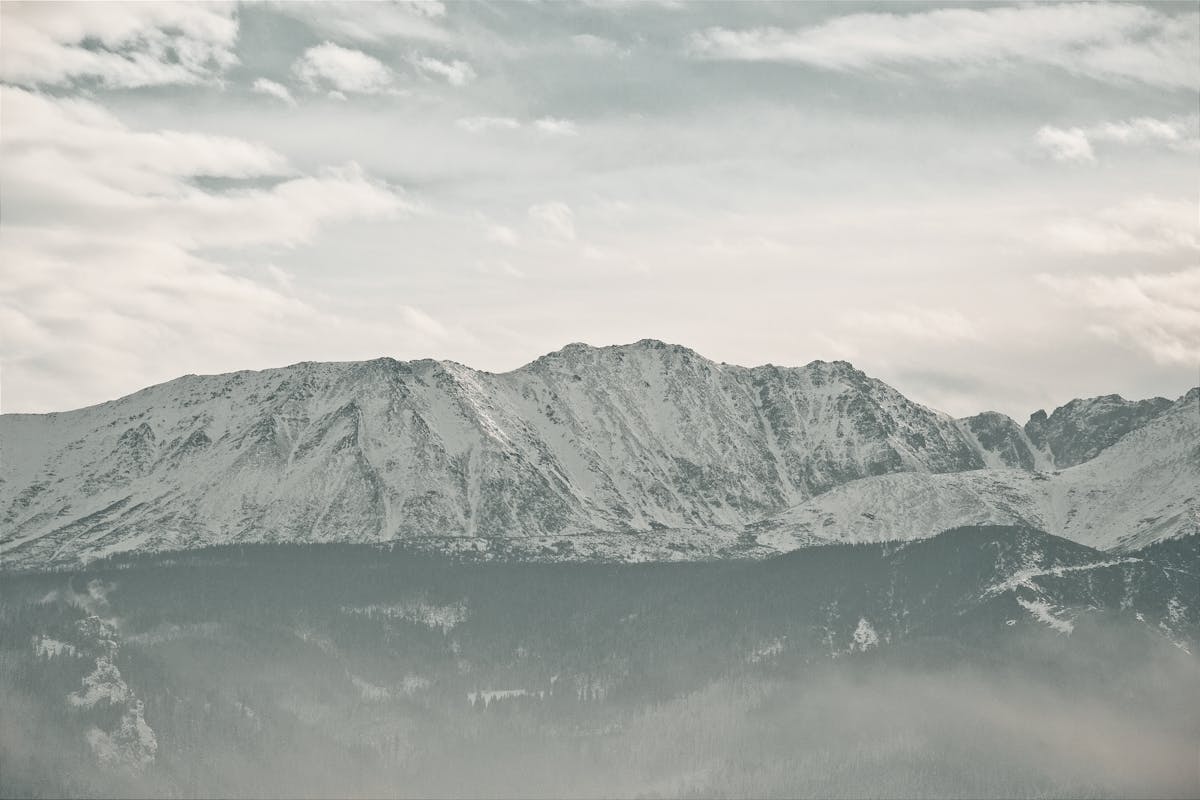
The Bridge Between Two Worlds
At 2,172 meters, Szpiglasowy Wierch is the massive granite wall separating Poland\'s two most spectacular high-alpine valleys: Morskie Oko and the Valley of Five Polish Ponds.
Standing on the summit of Szpiglasowy Wierch is like standing on a narrow balcony between two different mountain worlds. To the east, you gaze into the sheer turquoise abyss of Morskie Oko and the jagged silhouettes of the High Tatras, including Rysy. To the west, you look down onto the cascading blue plateau of the Valley of Five Polish Ponds. It is the single most visually rewarding day hike in the Tatras for those willing to brave the altitude.
1. History: The "Glass" Peak and the Miners
The name *Szpiglasowy* is derived from the German word *Spießglas* (antimony). In the 18th and early 19th centuries, German and highlander miners carved hidden paths here to extract veins of antimony, a rare mineral used to harden lead for bullets and create delicate glasswork. The remnants of these ancient mining pits can still be spotted by keen eyes near the Szpiglasowa Pass. Most of the modern trail, however, dates to 1937, when the "Ceprostrada" was constructed to make the summit accessible to the growing number of tourists visiting Morskie Oko.
2. Geology: The Granite Spine
Geologically, the Szpiglasowy massif is a prime example of the "hard" High Tatras. Composed entirely of deep-seated metamorphic granite, the mountain has resisted erosion much more effectively than the limestone peaks of the Western Tatras. The ridge is part of the "Glacial Staircase," where ancient glaciers carved out massive bowls (cirques) at different elevations. This creates the unique visual effect of "stepped" lakes that you see as you descend toward the Five Ponds valley.
Szpiglasowy Wierch is a high-altitude peak that requires strategic planning for prayer and logistics.
- Salah in the High Switchbacks: The summit is too narrow and crowded for Salah. However, the last 15 minutes of the **Ceprostrada** (Morskie Oko side) features wide, flat stone switchbacks. These are exceptionally clean and offer total privacy for Dhuhr or Asr prayers with a stunning lake view.
- High-Altitude Wudhu: There are no water sources once you leave the Morskie Oko or Five Ponds floors. We recommend carrying a 500ml bottle specifically for Wudhu, or performing it at the **Czarny Staw pod Rysami** if you are taking the scenic approach.
- Halal Food Strategy: This is a 9-10 hour trail. Pack energy-dense, halal-safe snacks like dates and nuts from Zakopane. If you finish in the Five Ponds valley, the shelter there offers excellent **Vegetarian Bean Soup** and apple pie for a post-hike celebration.
3. The Ceprostrada: A Paved Road to the Sky
The ascent from the Morskie Oko side is unique in the Tatras. The **Ceprostrada** (literally "the road for city-slickers") is an incredibly well-engineered hiking path. Built using massive granite blocks, it zigzags rhythmically up the peak. While the elevation gain is nearly 800 meters, the gentle gradient and solid footing make it one of the safest high-altitude paths in the park, suitable for fit families and older hikers who want to experience the 2,000-meter zone.
4. The Technical Descent: Steel Chains
If you cross over toward the **Valley of Five Polish Ponds**, the character of the trail changes instantly. The northern face is steep, rocky, and often remains damp or snowy late into July. To safely navigate the steepest 30-meter vertical drop, the park has installed heavy steel chains. You will need both hands to grip the chains while finding stable footholds in the granite chimneys. If you have a severe fear of heights, we recommend returning via the safe Ceprostrada toward Morskie Oko rather than attempting this descent.
5. Wildlife: The Alpine Guardians
The high ridges of Szpiglasowy are a favorite playground for the **Tatra Chamois** (*Kozica*). Because the peak is less crowded than Giewont, these shy animals can often be seen grazing just a few dozen meters from the path. You may also encounter the **Alpine Accentor** (*Płochacz halny*), a small, brownish bird that has adapted to survive the thin air and extreme cold of the summit. They are surprisingly friendly and often approach hikers at the pass looking for crumbs (though feeding them is strictly forbidden).
6. Navigation: The Grand Circuit
The most spectacular way to experience Szpiglasowy Wierch is as part of a "Grand Circuit":
- Start: Palenica Białczańska to Morskie Oko (8km walking or horse carriage).
- Ascent: Morskie Oko to Szpiglasowa Pass via the yellow trail (Ceprostrada).
- Summit: A 10-minute final push from the pass to the true peak (2,172m).
- Descent: Pass into the Valley of Five Polish Ponds via the chains.
- Return: Follow the blue trail out of the valley, passing the Siklawa Waterfall.