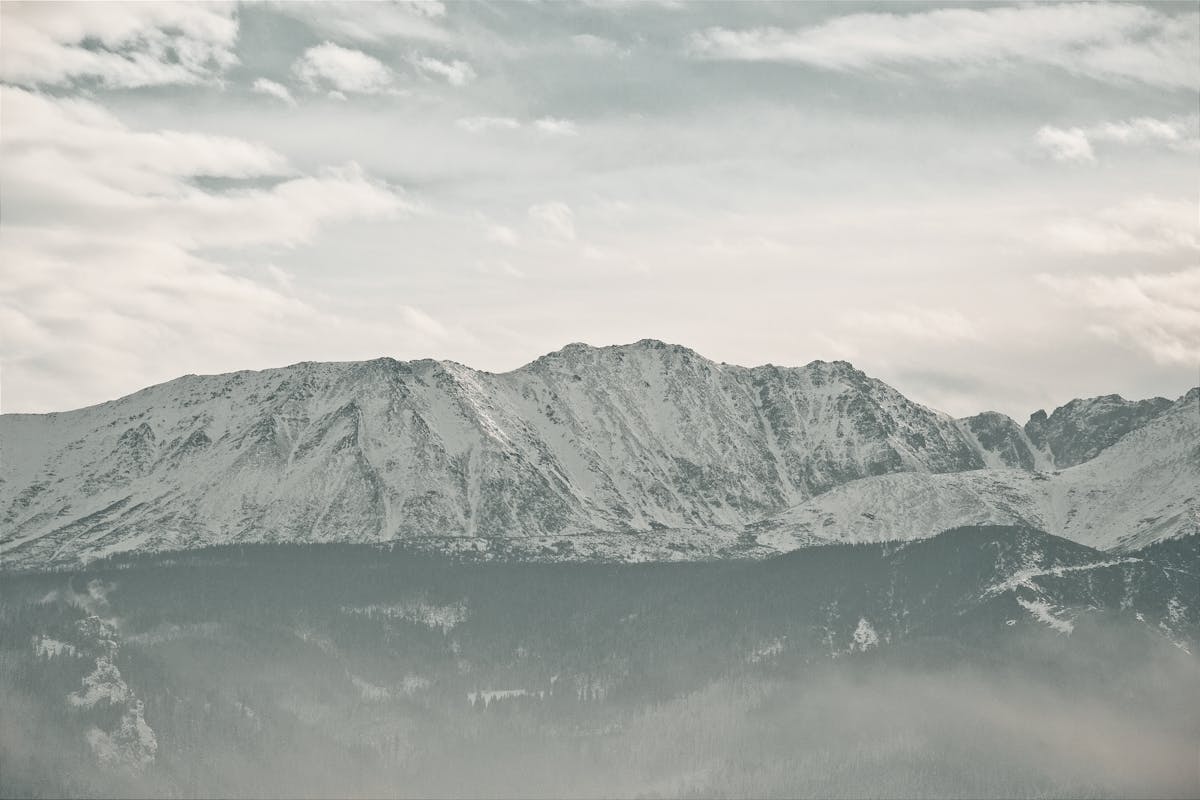
The "Little Meadow" Misnomer
Dolina Małej Łąki is perhaps the most deceptively named location in the Tatra National Park. Covering nearly 6 square kilometers, there is nothing "little" about its scale or its majesty.
Unlike the busy asphalt roads of Morskie Oko or the tractor-shuttles of Chochołowska, Mała Łąka remains raw, silent, and uncommercialized. It is deeply loved by locals and seasoned hikers seeking a quiet retreat from the Zakopane crowds. The yellow trail from Gronik winds upward through ancient, moss-covered spruce forests, completely enveloping you in the sights and sounds of the primeval alpine woods before bursting into the light of the great central meadow.
1. History: The Era of the Shepherds
In the 19th century, Dolina Małej Łąki was one of the most important centers for "pasterstwo" (shepherding) in the Western Tatras. The wide glacial floor allowed for larger herds of cattle and sheep than the narrow granite valleys to the east. Historically, there were several large wooden shelters here, but unlike those in other valleys, they were never rebuilt after being destroyed by avalanches or fire. This has left the valley in a state of "controlled wilderness." Today, the only remnants of this era are the stone foundations and the incredibly rich, fertilized soil of the meadow, which supports a level of biodiversity rarely seen at this altitude.
2. Geology: The Glacial Amphitheater
The defining feature of the valley is the **Wielka Polana Małołącka**—a perfectly flat, bowl-shaped clearing that was carved by a slow-moving mountain glacier thousands of years ago. It creates a massive green stage surrounded by a 360-degree amphitheater of rock. Geologically, this is the "Limestone-Dolomite Divide," where the softer sedimentary rocks have been hollowed out to create the valley floor, leaving the harder limestone peaks to form the towering vertical walls that hem you in on all sides.
Mała Łąka is a "wild valley," meaning it requires self-sufficiency but rewards you with total spiritual focus.
- The Ultimate Prayer Space: If you seek absolute serenity for Salah, the center of the **Wielka Polana** is arguably the best spot in the entire Tatra range. You can step 50 meters off the trail into a field of wildflowers and perform your prayers while directly facing the 500-meter vertical limestone walls of the High Tatras.
- Pure Stream Wudhu: The *Małołącki Potok* (Little Meadow Stream) runs parallel to the trail for the first hour of the hike. The water is incredibly cold and filtered through deep limestone layers. It is a perfect, spiritually cleansing location for Wudhu before you reach the upper meadows.
- No Commercial Facilities: There are **zero** food stands or shelters in this valley. You must pack your own Halal lunch. We recommend bringing calorie-dense foods like dates, honey, and nuts, as the final ascent toward the Giewont ridge is physically demanding.
3. The 500-Meter Wall: Wielka Turnia
Looming over the western side of the meadow is the **Wielka Turnia**—a monstrous, 500-meter-high sheer vertical wall of pale limestone. It is one of the most famous rock faces in Poland for technical climbing. Even for those not aiming to climb it, the scale is humbling. In the mornings, you can often see the sun hitting the face while the valley floor remains in deep, cool shadow. It is also a critical nesting site for the rare **Golden Eagle**, which uses the vertical updrafts of the wall to patrol the valley below.
4. Wildlife: The Woodpecker and the Deer
Because of the low foot traffic, the forests of Mała Łąka are a sanctuary for the **Black Woodpecker** (*Dzięcioł czarny*), a massive bird that sounds like a hammer striking an anvil in the silence of the woods. You are also much more likely to encounter **Red Deer** (*Jeleń szlachetny*) grazing in the lower meadows here than in busier valleys. Be sure to keep a respectful distance, especially during the autumn mating season when the stags' roaring echoes through the rock walls.
5. Navigation: The Gateway Peak
Mała Łąka is the perfect "hub" for connecting to more famous landmarks:
- The Kondracka Pass: From the Great Meadow, continue on the purple/yellow trail to reach the base of Giewont in 45 minutes.
- Przysłop Miętusi: A 30-minute side trail leads to one of the most beautiful viewpoints over the Czerwone Wierchy (Red Peaks).
- The Return Loop: We recommend ascending the yellow trail and returning via the black trail toward the Za Bramką valley for a complete forest circuit.
6. Safety: The Limestone Hazard
Always remember that limestone becomes incredibly slippery when wet. The stairs in the lower part of the valley can turn into a "river of ice" after even a light rain. Wear hiking boots with deep treads (Vibram or equivalent) to maintain your grip while crossing the stream sections or climbing the final switchbacks toward the summit ridges.
Local Secret
The Great Meadow is famous, but my secret is the **Lower Path** (*Ścieżka Dolna*) that hugs the eastern forest edge. While most people walk the center, this forest path is home to the most vibrant moss you've ever seen, and in July, you can find **wild strawberries** (*poziomki*) that are so sweet they taste like candy. My second secret: if you look at the **Wielka Turnia** wall during a sunset, the limestone doesn't just turn orange; for about 3 minutes, it looks like it's made of solid gold. It's the most peaceful 3 minutes in Zakopane.