The Crown of the Red Peaks
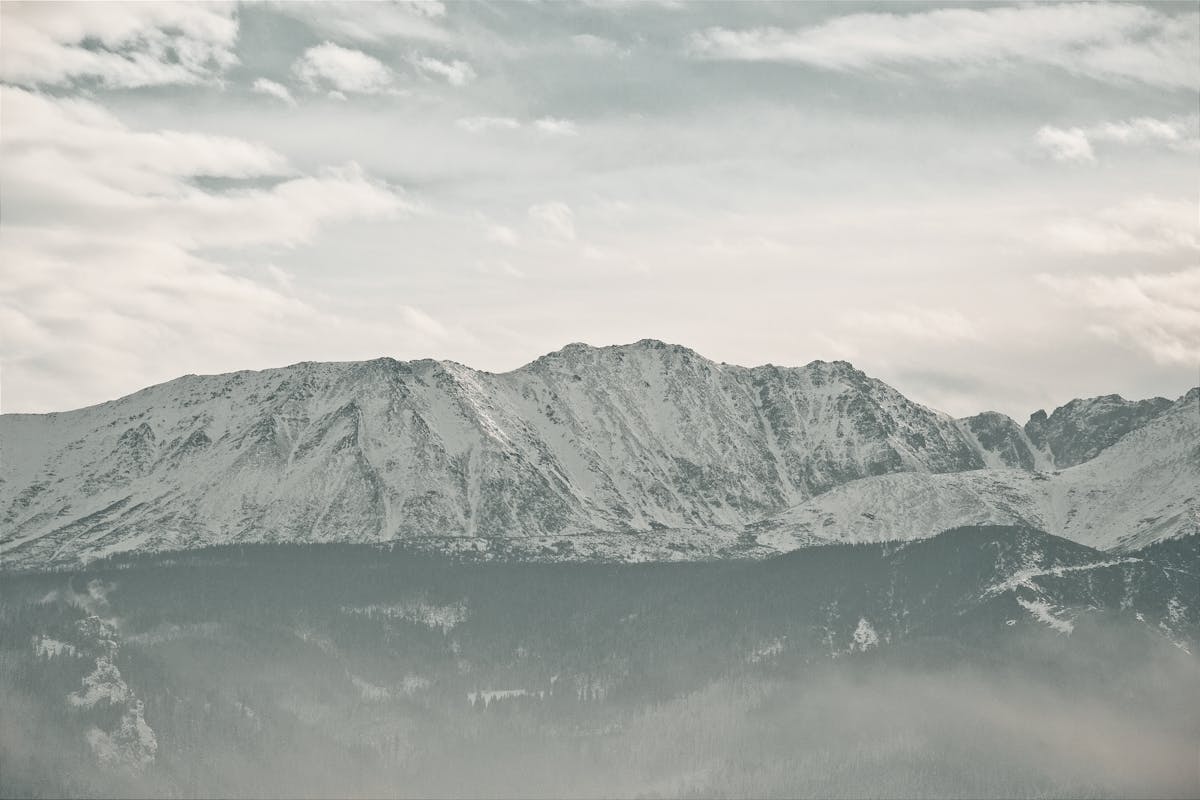
Standing proudly at 2,122 meters (6,962 feet), Krzesanica is the undisputed king of the Czerwone Wierchy (Red Peaks) massif.
Though it is only a few meters taller than its neighbors, reaching its summit is a badge of honor for anyone attempting the famous four-peak traverse along the Polish-Slovak border. The approach along the rolling ridge is deceptive; you walk on what feels like an endless high-altitude meadow until you step onto the stony summit plateau, where the terrain suddenly and violently changes. From here, the world drops away, revealing a 360-degree panorama of the entire Tatra range.
1. Anatomy of the "Red" Landscape: Botanical Magic
The name 'Red Peaks' is not derived from the rock itself—which is actually a pale, weathered limestone—but rather from a unique high-alpine plant called **Sit skucina** (*Juncus trifidus*). This hardy, grass-like rush is a survivor of the Ice Age, clinging to the thin, acidic soil of the granite-limestone contact zone. In the late summer and specifically during September and October, the chlorophyll in the plant retreats, and it begins to accumulate pigments that turn the entire expansive ridge into a blazing carpet of rust, copper, and deep crimson. This transformation is most intense on the gentle slopes of Krzesanica. When the western sun hits the grass at a low angle during the "Golden Hour," the entire mountain seems to glow with an inner fire, creating a visual spectacle that feels more like the surface of a distant planet than a European mountain range.
2. History: The Peak of the First Explorers
While the highlanders have known these peaks for centuries, the scientific exploration of Krzesanica began in the mid-19th century. Early botanists and geologists were fascinated by the unique combination of limestone rock and granite-loving plants. It was during this period that the first topographical maps were drawn, often by brave explorers who climbed the 200-meter vertical northern face long before modern climbing gear existed. These pioneers reported that the silence at the summit of Krzesanica was so intense it felt "sacred," a sentiment that modern hikers still echo today as they stand amidst the ancient stones and whistling marmots.
3. The Abyss: The 200-Meter Northern Drop
The name "Krzesanica" loosely translates to "The Hewn Rock" or "The Chiseled One" in the ancient Goral dialect. The reason becomes terrifyingly obvious when you look over the northern edge of the summit. The gently rolling grass suddenly ceases, giving way to a completely sheer, vertical limestone cliff that drops an astonishing 200 meters straight down into the **Mułowa Valley**.
This massive, pale gray rock face is an awe-inspiring sight, often called the "Wall of the West." High-altitude acoustics mean that in the early morning, you can often clearly hear the rushing of waterfalls from the valleys hundreds of meters below, sounding as if they were right next to you. However, this feature demands immense respect—it is arguably the most dangerous precipice on the entire trail. In foggy conditions, several hikers have historically walked right off the edge, mistaking the grey mist for a continued grassy slope. Stay strictly to the center of the path and respect the boundary between the grass and the void.
Finding the fossilized sea shells (ammonites) can feel like a scavenger hunt. The best place to look is right on the short, rocky saddle between the summit of Krzesanica and the neighboring peak of Ciemniak. Look closely at the loose, reddish-white stones lying directly on the path. You'll often see perfect spirals embedded in the rock. Just remember—take photos, but leave the stones on the mountain!
4. Hidden Depths: The Great Mułowa Cave
The beauty of Krzesanica isn't just on the surface; it's deep inside the mountain. The limestone geology of the Red Peaks is riddled with one of the most complex cave systems in the world. Just below the northern face of Krzesanica lies the entrance to **Wielka Śnieżna** (Great Snowy Cave), the deepest and longest cave in Poland. Its shafts drop over 800 meters into the darkness. While these are only accessible to professional speleologists with special permits, knowing that you are standing on top of a giant, frozen honeycomb of ice-caves adds a layer of mystery to the hike.
Krzesanica sits dead-center on the ridge traverse, meaning you are at your furthest point from civilization. Spiritual and physical preparation is key.
- Caloric Needs: You will have burned massive amounts of energy by the time you reach this peak. Pack high-energy Halal snacks (protein bars, mixed nuts, dried dates) to avoid altitude fatigue. There are no shelters on the ridge, so your backpack is your ONLY resource for the next 4 hours.
- Secure Prayer Space: The summit is often hit by high-velocity ridge winds. For a secure Salah, walk 5 minutes eastward along the ridge toward Małołączniak. The trail dips into a shallow "saddle" (przełęcz) with a wide, flat grassy area that acts as a natural windbreak. Praying at 2,000+ meters offers an unparalleled sense of *Tawakkul*.
- Water Strategy: The limestone of the Red Peaks is incredibly porous and "thirsty." There is absolutely no water on the ridge. Ensure you have performed Wudhu at the Kuźnice trailhead or at one of the lower valley streams. Carry at least 3 liters of water for the full traverse.
5. Wildlife: The Golden Eagle's Peak
The stony upper reaches and vertical cliffs of Krzesanica are the prime habitat for the **Tatra Marmot** (*Świstak*). You are highly likely to hear their sharp, ear-piercing whistles echoing off the limestone walls before you see them. But keep your eyes on the sky as well. The thermal currents rising from the Mułowa Valley make this a favorite hunting ground for the **Golden Eagle** (*Orzeł przedni*). These majestic predators can often be seen soaring in giant circles above the Krzesanica cliffs, scouting the meadows for marmots. It is one of the few places in the Tatras where you can see these birds of prey hunting at eye-level from the ridge.
6. Geology: The Limestone Desert
The summit plateau of Krzesanica is often referred to as a "limestone desert." Because the rock is so porous, soil cannot easily form, leaving a landscape of jagged white stones and specialized alpine plants that have adapted to survive with almost no surface water. This harsh environment creates a unique aesthetic that feels more like a lunar landscape than a mountain in Central Europe. Walking through this "desert" at sunset, with the stones glowing gold, is a visual experience that captures the raw, untamed essence of the High Tatras.