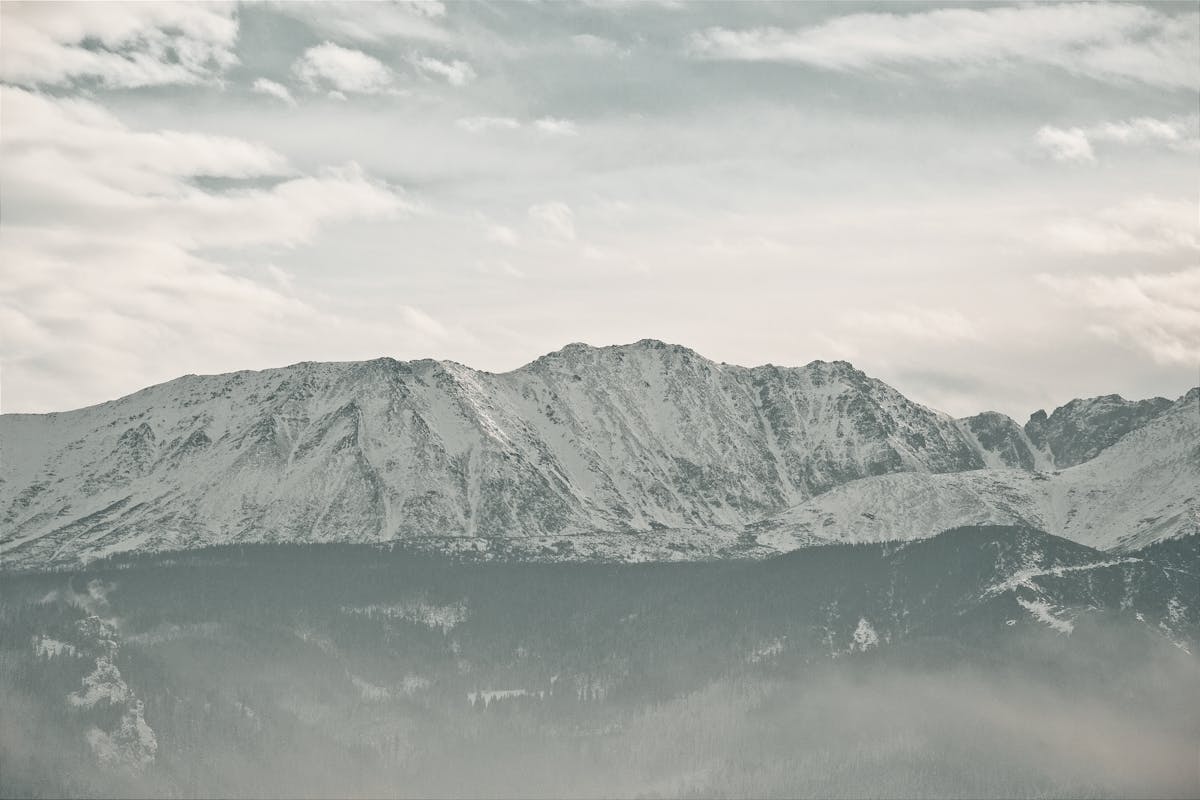
The Best View in Zakopane?
Ask a local where to get the most dramatic photo of Mt Giewont, and they will point you toward Sarnia Skała. At 1,377m, it is the ultimate "face-to-face" viewpoint.
This rocky limestone peak sits directly across a deep gorge from the massive, vertical 600-meter north wall of the "Sleeping Knight" (Giewont). It provides a perspective that is both humbling and spectacular, making you feel as though you can reach out and touch the iconic iron cross on Giewont\'s summit. While much lower than the high peaks to the south, Sarnia Skała offers a 360-degree panorama that includes the entire Zakopane valley, the Gubałówka ridge, and the jagged horizon of the High Tatras.
1. History: The "Chamois" Legend and the Miners
The name *Sarnia Skała* translates to "Roe Deer Rock," but historical legends suggest a much more ancient origin. Local folklore speaks of a dragon-like creature that once lived in the caves beneath the peak, guarding a hoard of precious minerals. In the 18th and 19th centuries, the mountain was a site of frantic mining activity, as local Gorals searched for veins of iron and lead. The trails you walk today were originally carved by these hardy miners and later refined by the first professional Tatra mountain guides. In the early days of tourism, Sarnia Skała was the favorite destination for artists and poets from Krakow who sought "the sublime" in the shadow of Giewont’s vertical cliffs.
2. Geology: The Limestone Monolith
Geologically, Sarnia Skała is a massive monolith of **Jurassic limestone**. It escaped the intense folding that created the higher ridges, standing as a solid block of ancient seabed that has been polished by wind and ice over millions of years. The rock here is exceptionally white and bright, creating a sharp contrast with the dark green spruce forests that surround it. The interaction between the limestone and the frequent rainfall in this part of the park has created "micro-karst" features—tiny, sharp channels in the stone that provide excellent, if somewhat abrasive, grip for hikers during the final scramble.
Sarnia Skała offers a unique opportunity for prayer in the shadow of the Tatras' most famous icon.
- Salah at the Red Pass: The summit of Sarnia Skała can be windy and exposed. For a more peaceful Salah, stop at the **Czerwona Przełęcz** (Red Pass) just 10 minutes below the top. There are several sheltered, soft grassy areas hidden by thick mountain pines that offer total privacy and a dignified atmosphere for prayer.
- Waterfall Wudhu: Following our "Perfect Loop," you will pass the **Siklawica Waterfall**. The water here falls directly from the Giewont massif and is incredibly pure. It is one of the most spiritually refreshing locations in the park to perform Wudhu before beginning your ascent or after descending the ridge.
- Halal Food Options: The tea house at **Polana Strążyska** (at the base) offers traditional vegetarian sides. We recommend the fried potatoes (*Frytki*) or the local forest fruit teas. However, for a proper meal, pack a Halal lunch to enjoy at the summit rocks while watching the Alpenglow hit the Giewont cliffs.
3. The Panorama: Giewont\'s North Wall
The defining visual experience of Sarnia Skała is the "face-to-face" confrontation with Giewont. From this angle, you see the true scale of the "Sleeping Knight." The 600-meter drop from the summit to the valley floor is one of the largest vertical reliefs in Poland. You can clearly see the zig-zagging "Goral path" that climbers take to reach the cross. Looking north, the view of Zakopane is unparalleled—you can see the entire layout of the town, from the jump hill to the Krupówki street, framed by the rolling Gubałówka hills in the distance.
4. Wildlife: The Goshawk\'s Nest
The forests surrounding the Red Pass are a favored hunting ground for the **Northern Goshawk** (*Jastrząb gołębiarz*). These powerful raptors use the thermals coming off the Giewont wall to gain altitude before diving into the woods. In the higher meadows, keep an eye out for the **Tatra Marmot** (*Świstak*). Although more common in the High Tatras, a small colony has established itself in the quieter gullies near the Sarnia massif, occasionally announcing themselves with their famous high-pitched warning whistles.
5. Navigation: The Grand Valley Loop
To experience the full diversity of this landscape, we recommend the following loop:
- Phase 1: Ascend via **Dolina Strążyska**. This is a flat, 40-minute walk through a wide valley floor ending at the mountain tea house.
- Phase 2: Take the 15-minute detour to **Siklawica Waterfall** to see the water cascading down from the Giewont giants.
- Phase 3: The main climb from the tea house to the **Czerwona Przełęcz** (Red Pass) and onto the Sarnia Skała summit.
- Phase 4: Descend via **Dolina Białego** (White Valley). This is a narrower, wilder valley following a crystal-clear stream through a white limestone gorge.
6. Safety: The Polished Limestone
The rocky summit of Sarnia Skała is composed of limestone that has been "polished" by millions of hikers over the last 150 years. This makes the rocks as smooth as glass in certain places. Even on a dry day, be cautious with your footing, especially when looking through a camera lens. Proper hiking boots with a "Vibram" style sole are strongly recommended to ensure a safe and enjoyable experience on the final scramble.
On the way down via Dolina Białego, there's a small wooden bridge where the stream creates a series of mini-waterfalls. Stop here to perform Wudhu; the water is ice-cold, pure, and incredibly refreshing.