M ost Muslim visitors to southern Poland land in Kraków, book a hotel in or near the Old Town, and then discover that the things they actually came to see are spread across a hundred kilometres of countryside. This guide covers every day trip worth making from Kraków — how far each one really is, how long it takes, and the two questions no general travel site answers: where you will eat, and where you will pray.
Kraków sits at a useful point on the map. Within a two-hour drive you have a UNESCO salt mine, the most significant memorial site in Europe, a limestone river gorge with rafts that have run since the 1830s, two medieval castles facing each other across a reservoir, and the Tatra Mountains. Almost none of it is reachable by a quick taxi, and public transport to several of these places is genuinely awkward with children and luggage. Planning matters here more than it does in most European city breaks.
The geography, honestly
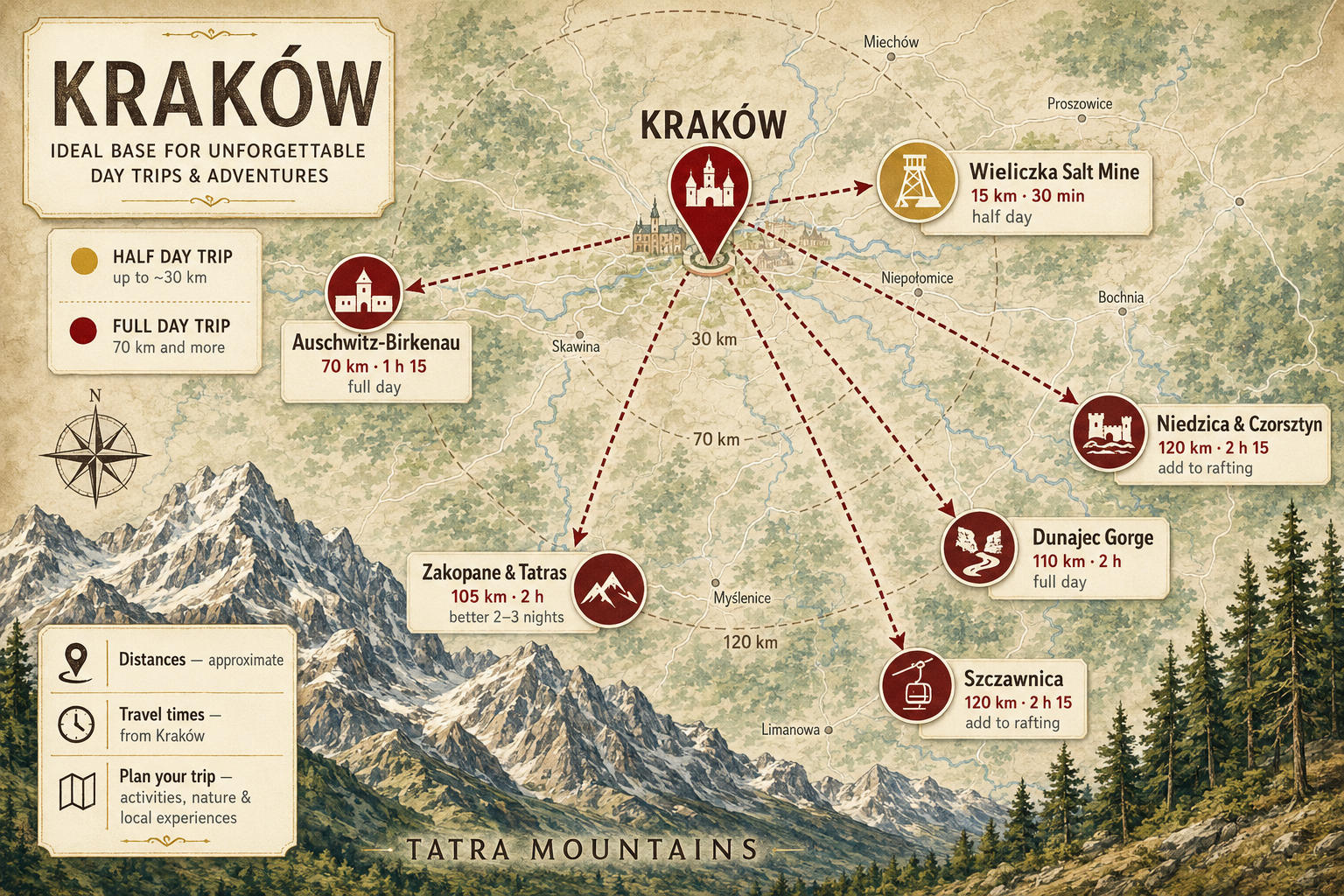
Before choosing anything, it helps to see the distances laid out. These are driving times in normal conditions; add a third in July and August, and add more on Sunday evenings when the whole region drives back towards Kraków at once.
| Destination | From Kraków | Time needed | Best for |
|---|---|---|---|
| Wieliczka Salt Mine | 15 km · 30 min | Half day | First trip, families, bad weather |
| Auschwitz-Birkenau | 70 km · 1 h 15 | Full day | Adults and older teenagers |
| Zakopane & the Tatras | 105 km · 2 h | Full day, better as 2–3 nights | Mountains, halal food, families |
| Dunajec Gorge rafting | 110 km · 2 h | Full day | All ages, no fitness needed |
| Niedzica & Czorsztyn castles | 120 km · 2 h 15 | Combine with rafting | History, photography |
| Szczawnica & Palenica | 120 km · 2 h 15 | Combine with rafting | Easy views without hiking |
The practical consequence: Wieliczka is the only one you can treat casually. Everything else eats a day, so a three-night Kraków stay realistically gives you two day trips, not four.
Wieliczka Salt Mine
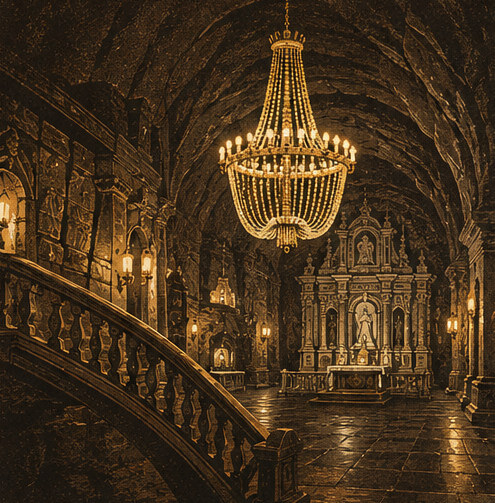
Wieliczka is the easiest trip on this list and the one that works when the weather has collapsed. The mine has been worked since the 13th century and the tourist route descends to 135 metres through chambers cut entirely from rock salt — including St Kinga's Chapel, a full-size underground church with chandeliers whose crystals are salt, carved over decades by miners working after their shifts.
Two things to know before booking. The route involves around 800 steps down and roughly three kilometres of walking, and once you are in there is no easy way out mid-tour — it is not a trip for anyone with mobility problems or for a pushchair. And the temperature underground sits at a constant 14 °C whatever the season, so the light jacket you skip on a 30-degree August afternoon is exactly what you will want an hour later.
Entry is by timed guided tour only, and slots for tours in a given language sell out days ahead in summer. Booking in advance is not optional in high season.
Book Wieliczka with transport from Kraków
If you already have transport, a ticket-only option is cheaper and lets you arrive on your own schedule — useful if you want to fit the mine around a prayer time rather than around a coach timetable.
Auschwitz-Birkenau
Before anything else: the Auschwitz-Birkenau State Museum is a memorial and a cemetery, and entry to the site is free of charge. What tour operators sell is transport from Kraków and an educator's time — not admission. You can reserve a free entry card directly on the museum's own website and travel there independently. We say this plainly because a memorial to 1.1 million murdered people should never be presented as a ticketed attraction.
Roughly 1.1 million people were killed at Auschwitz, the overwhelming majority of them Jews deported from across occupied Europe, along with Poles, Roma, Soviet prisoners of war and others. The site preserves two locations about three kilometres apart: Auschwitz I, with its brick blocks and the exhibitions of confiscated belongings, and Auschwitz II-Birkenau, the vastly larger extermination camp with the ruins of the gas chambers and crematoria the SS dynamited as the Red Army approached.
Practically: allow a full day. The visit itself runs three and a half hours minimum across both sites, plus around three hours of travel. Between roughly 10:00 and 15:00 in season, entry is only possible with a museum educator; outside those hours individual entry is permitted. Children under 14 are not recommended by the museum itself, and that guidance is worth taking seriously rather than treating as a formality.
Dress and conduct matter. This is a place of mourning: modest clothing, quiet voices, no eating on site, and no photography in the room holding victims' hair. For Muslim visitors specifically, there is no prayer space at the memorial and prayer on the grounds would be out of keeping with the site; plan Dhuhr and Asr around the visit, or pray at the coach before entering.
Compare guided tours with transport from Kraków
An organised trip removes two real difficulties: the museum's own free entry cards are released on a fixed schedule and disappear within minutes in summer, and the site is poorly served by public transport from Kraków. A full-day guided option covering both sites is the usual choice; if you would rather have the educator's commentary without a group, self-guided transfers exist too.
One booking detail that catches people out: every visitor's full name must be given at the time of booking and must match the ID you bring. The museum refuses entry on a name mismatch, and for travellers whose passport transliterates an Arabic name differently from how they usually write it, that is a real risk. Use the passport spelling exactly.
Dunajec Gorge rafting
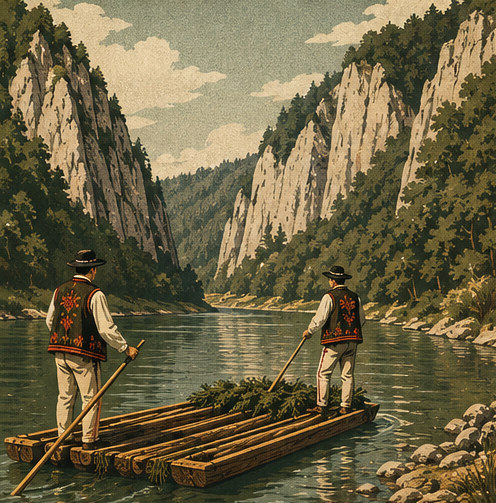
This is the trip most Gulf families end up rating highest, and the one they had never heard of before arriving. The Dunajec river cuts a deep limestone gorge along the Polish-Slovak border through the Pieniny mountains, and for nearly two centuries local raftsmen — the flisacy — have poled flat wooden rafts down it in embroidered highland dress.
It is worth being clear about what this is not. Despite the English word “rafting”, there are no rapids and nobody gets wet. The rafts drift; the raftsmen steer with long poles and tell stories. The run from Sromowce Wyżne to Szczawnica takes about two and a quarter hours and is entirely suitable for grandparents, for small children, and for anyone in abaya or thobe who has no intention of changing clothes for an activity. You sit on a bench, in the open air, and watch 500-metre limestone walls go past.
The season runs from around April to late October — the rafts do not operate in winter, and high water after heavy rain can suspend them at short notice. Rafting normally ends in Szczawnica, several kilometres downstream of where you started, so getting back to your car is a genuine logistical problem: this is the trip where an organised tour earns its price most clearly.
Book Dunajec rafting from Kraków
Several combinations exist and they suit different families. Rafting with thermal baths added makes a long but satisfying day, though be aware Polish thermal complexes are mixed-gender — our guide to the thermal baths for Muslim visitors covers which have women-only hours. Rafting combined with the Palenica chairlift at Szczawnica gives you the gorge from the water and then from above, with no walking involved. And if you are short on days, rafting plus Zakopane in one day exists, though it is a fourteen-hour day and you will see both places briefly.
Niedzica and Czorsztyn: two castles, one lake
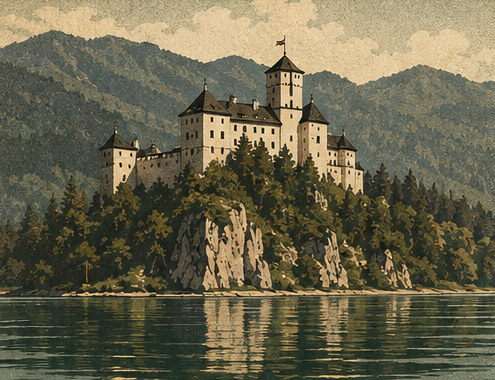
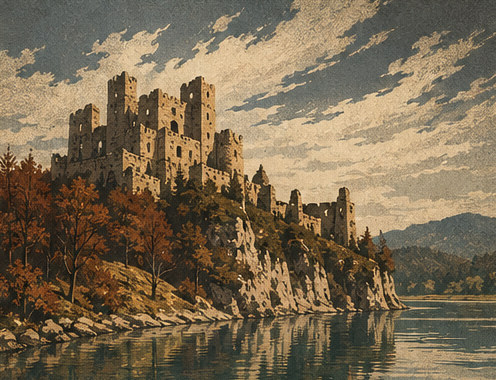
Where the Dunajec was dammed in the 1990s, a reservoir now sits between two castles that spent centuries staring at each other across the valley — and across an international border. Czorsztyn, on the northern shore, is a Polish royal fortress that guarded the trade route to Hungary and stands today as a dramatic ruin on a rock. Niedzica, opposite, is the far better preserved of the pair: a 14th-century Hungarian stronghold with furnished rooms, courtyards and a persistent legend about Inca treasure hidden in its walls.
Neither castle justifies the two-hour drive on its own. Both are excellent as an add-on to rafting, since the rafts pass directly beneath Niedzica and the boat across the reservoir links the two in about twenty minutes.
See Niedzica Castle tours & tickets
For the wider area, browse what runs from Czorsztyn and Pieniny National Park as a whole, which is where most of these itineraries are actually assembled.
Szczawnica
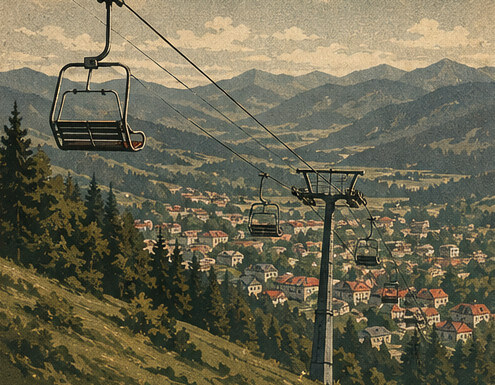
Szczawnica is where the rafts finish: a 19th-century spa town strung along a valley, with wooden pump-room architecture, mineral springs you can still drink from, and a promenade that is pleasant to walk without being a hike. The Palenica chairlift climbs straight from the town centre to a ridge with a full view over the Pieniny — a genuinely spectacular panorama reached by sitting down for eight minutes, which makes it one of the few viewpoints in southern Poland accessible to grandparents and toddlers alike.
The mineral waters are worth trying and worth a warning: they are strongly sulphurous and taste like it. Locals drink them for their calcium, magnesium and iron content. Most first-timers manage one cup.
Zakopane and the Tatras
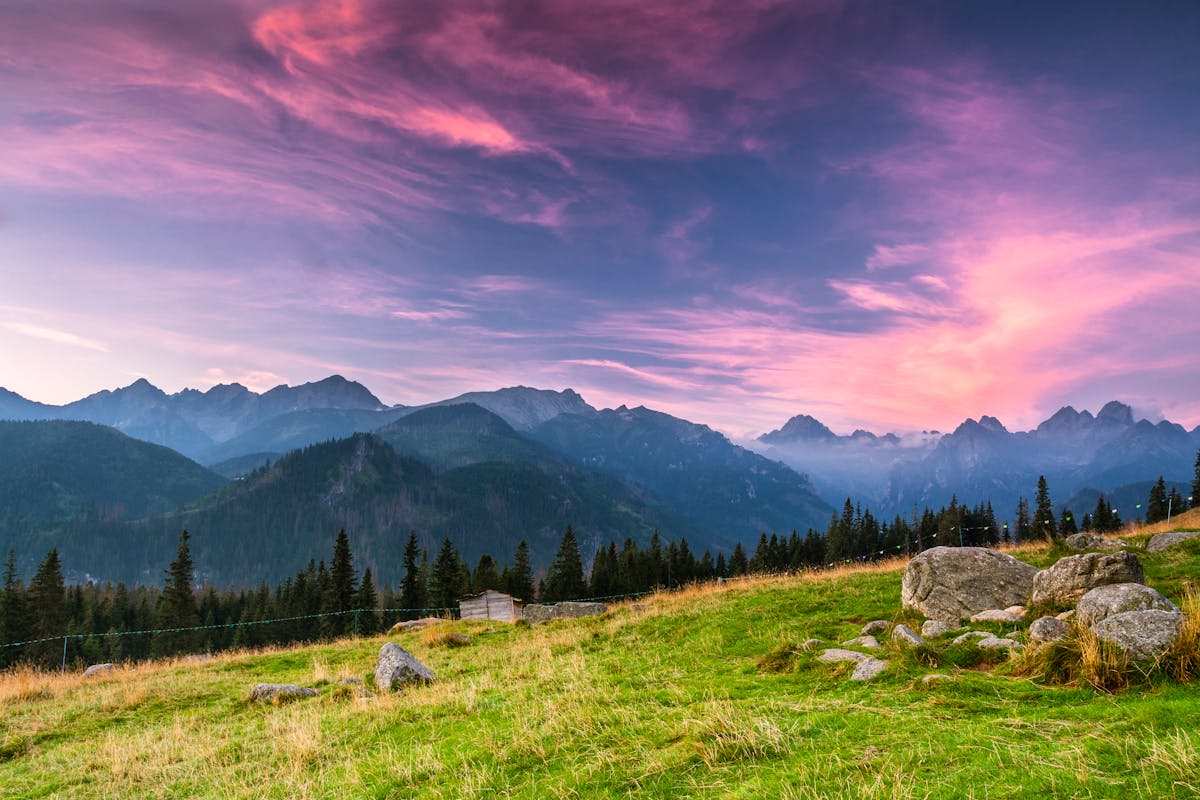
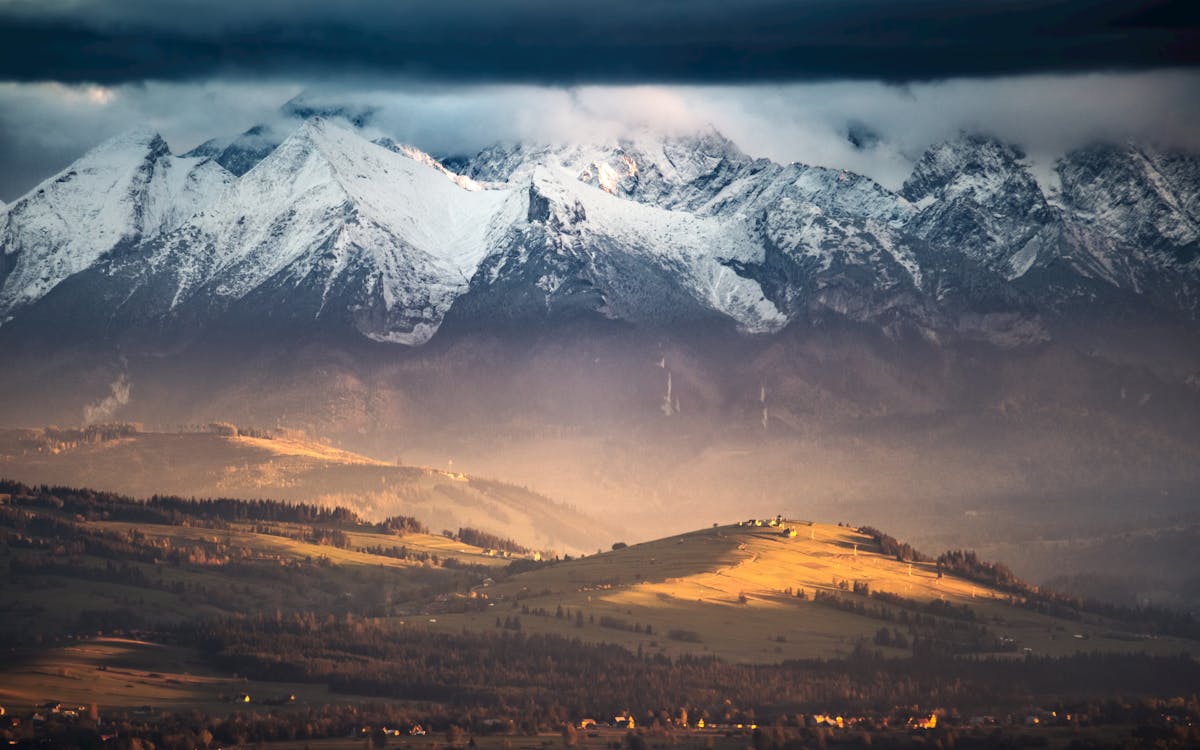
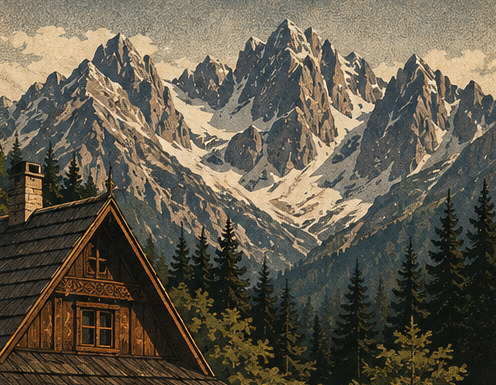
Zakopane is the one destination on this list we would argue you should not do as a day trip. Two hours each way leaves perhaps five hours in town, which is enough for the Krupówki promenade and one cable car if the queue is kind. It is not enough for Morskie Oko, and it is nowhere near enough to eat properly — and Zakopane is the only place in this region with a real halal restaurant scene, seventeen venues we have checked ourselves.
If your days are fixed and one is all you have, take a tour that packages the cable car and transport rather than trying to improvise. If you have any flexibility at all, move two or three nights of your stay from Kraków to Zakopane. Our three-day itinerary and the transport guide from Kraków airport both assume that, and it is the arrangement almost every family we hear from ends up wishing they had booked.
Eating and praying on a day trip
This is the part general guides skip, and it is the part that decides whether a day out is comfortable or exhausting.
Food. Kraków has a reasonable number of halal restaurants, mostly Turkish and Middle Eastern, concentrated around Kazimierz and the streets north of the Old Town. Everywhere else on this list has effectively none. Wieliczka, Oświęcim, Sromowce, Czorsztyn and Szczawnica have ordinary Polish tourist catering, and highland cooking uses pork fat routinely — including in dishes that contain no visible meat, which is covered in our guide to hidden non-halal ingredients. Assume you are carrying lunch. Buy it in Kraków in the morning; a bakery plus fruit plus something from a Turkish shop covers a family for a day and removes the whole problem.
Prayer. None of these sites has a prayer room. In practice: pray Fajr at the hotel before departure, combine Dhuhr and Asr where your school of thought permits it while travelling, and use the coach or car for Asr on the return leg. Poland's latitude makes this more awkward than it sounds in summer, when Isha can fall close to midnight and Fajr around 03:00 — our prayer times page calculates for local coordinates rather than for a generic European city, and the gap between the two is not trivial in June.
Modest dress. Nowhere on this list requires anything of you, and hijab draws no attention in Kraków or on the tourist routes. The practical considerations are physical, not social: Wieliczka is 14 °C and involves 800 steps, the rafts are open to the weather and the wind on the water is cold even in August, and Auschwitz is walked almost entirely outdoors across three kilometres with no shelter.
Ramadan. If you are travelling during Ramadan, note that Poland's long summer fasting days make the full Auschwitz itinerary genuinely hard — ten hours out, most of it walking outdoors. Wieliczka, at half a day and underground at a constant 14 °C, is much the kinder option.
Which to choose
One free day
Wieliczka
Half a day, thirty minutes away, works in any weather and with any age group. Leaves your afternoon in Kraków intact.
Two free days
Wieliczka + Dunajec
One easy half-day and one full day in the mountains that suits every age in the family. The strongest pairing for a first visit.
Three or more
Move to Zakopane
Stop commuting. Two nights in Zakopane turns three rushed day trips into a proper mountain stay with halal food on the doorstep.
Whatever you pick, book the transport rather than the destination. The attractions themselves are rarely the constraint in southern Poland — getting to them, and getting back, almost always is.