I f there is one smell that defines Zakopane, it is the smoky aroma of grilled **Oscypek** cheese. But for the halal-conscious traveler, a simple question arises: What is in the rennet? In this report, we break down the science and tradition of the Podhale region's most famous export.
1. The Traditional Rennet (Podpuszczka)
Traditionally, Oscypek is made using animal rennet (podpuszczka), which is an enzyme from the stomach of young calves or lambs. In the Podhale region, this has been the standard for centuries.
Halal Status:
Since the calves or lambs are generally not slaughtered according to Islamic (Dhabiha) standards, cheese made with traditional animal rennet is considered **Mashbooh (Doubtful)** or **Haram** by many scholars. However, there is a modern solution.
2. The Rise of Microbial Rennet
Many larger producers in Zakopane and regional dairies have switched to **Microbial Rennet** (synthetically or fungally produced enzymes) because it is more consistent and cost-effective. Cheese made with microbial rennet is **100% Halal and Vegetarian friendly**.
3. How to check on Krupówki?
When buying Oscypek from the wooden stalls (Bachy) on Krupówki street, you can ask the vendor about the rennet. Use the following Polish phrase:
(Is this made with microbial rennet?)
4. Safe Recommendations
- Supermarkets: If you buy Oscypek or "Gozdzik" cheese from Biedronka or Lidl, check the label for "podpuszczka mikrobiologiczna". Most commercial brands use this.
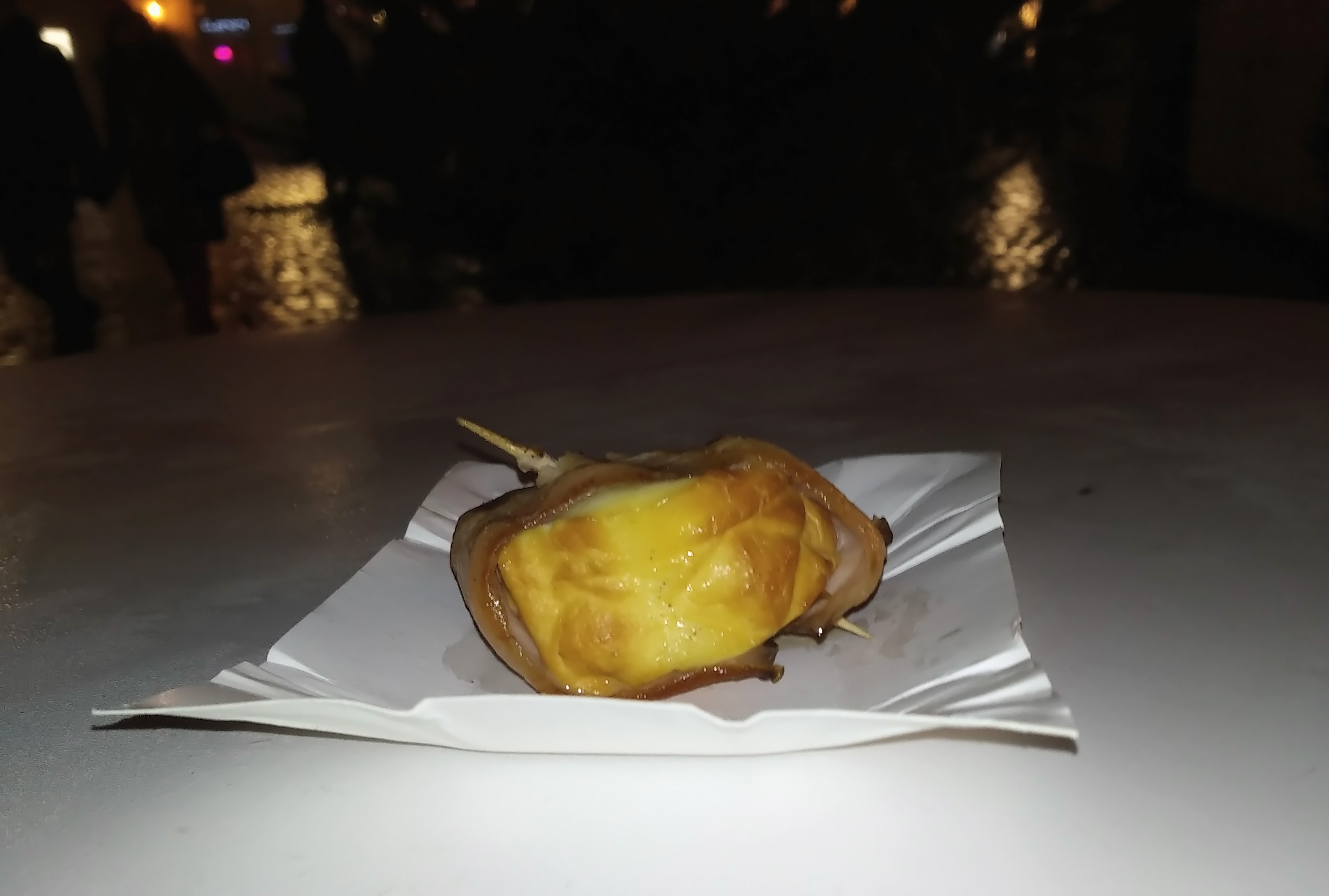
- Grilled Stalls: The grilled cheese with cranberry jam (Boczek-free!) is usually made from larger industrial batches using microbial rennet.
What is Oscypek? History and Production
Oscypek (pronounced os-TSI-pek) is a smoked sheep's milk cheese produced exclusively in the Tatra Mountain region of southern Poland. It has European Union Protected Designation of Origin (PDO) status, which means that authentic oscypek can only be produced by certified highland shepherds (bacowie) in specific villages using traditional methods passed down through generations. The cheese is made from salted sheep's milk, sometimes mixed with up to 40% cow's milk, and formed into distinctive spindle or barrel shapes decorated with detailed carved patterns. After shaping, it is smoked over spruce wood fires for several days, giving it a distinctive golden-brown rind and a firm, slightly chewy texture with a complex smoky, salty, slightly tangy flavour.
Oscypek has been part of Tatra highland culture for at least 400 years. The shepherds who produce it spend summers in high mountain pastures (poloniny), grazing their flocks and making cheese in traditional wooden huts (bacowki). The cheese you buy from vendors on Krupowki Street was very likely made in exactly this traditional manner just days earlier.
The Rennet Question: What is Rennet?
Rennet is a complex of enzymes traditionally obtained from the stomach lining of young ruminant animals (calves, lambs, or kids). When added to warm milk, these enzymes cause the milk proteins to coagulate and separate into curds and whey, the foundation of cheese-making. Without rennet or another coagulant, milk cannot be transformed into solid cheese.
There are several types of rennet available today:
- Animal rennet: Extracted from the fourth stomach (abomasum) of slaughtered young ruminants. The halal status depends on whether the animal was slaughtered according to Islamic rites.
- Microbial rennet: Derived from certain moulds (mainly Rhizomucor miehei). Vegetarian and halal-friendly. Widely used in mass-produced cheeses.
- Fermentation-produced chymosin (FPC): Genetically engineered rennet using yeast or fungi. Very widely used in modern cheese production. Generally considered halal by most scholars.
- Plant-based coagulants: From plants like fig sap or nettles. Used in some artisan cheeses but not in oscypek.
Traditional oscypek uses animal rennet (podpuszczka naturalna in Polish) as required by the PDO specification. Specifically, the rennet comes from the stomachs of goats and lambs. This is central to the halal debate surrounding oscypek.
Islamic Scholarly Perspectives on Animal Rennet
This is a contested area in Islamic jurisprudence, and different scholarly traditions reach different conclusions. We present the main positions fairly, the final decision is yours based on your madhab (school of jurisprudence) and personal religious guidance.
Position 1: Permissible (Halal)
Many Hanafi scholars consider animal rennet from any ruminant animal to be halal regardless of how the animal was slaughtered. Their reasoning is that the rennet itself undergoes a chemical transformation (istihalah) during the cheese-making process, and the resulting substance is so different from its origin that it should be treated as a new, permissible substance. Some Maliki scholars also take this position. This is why cheese is widely consumed by Muslim communities in many parts of the world even when the rennet source is uncertain.
Position 2: Requires Halal-Slaughtered Animal
Shafi'i and Hanbali scholars generally hold that for animal rennet to be permissible, it must come from an animal that was slaughtered according to Islamic rites. If the source animal was not halal-slaughtered, the rennet, and therefore the cheese, would not be permissible. Since oscypek rennet comes from lambs and kids whose slaughter method is not certified halal, these scholars would consider it impermissible.
Our Recommendation
We do not declare a fatwa on this matter. Consult your imam, family scholar, or the Islamic authority you follow. If you follow the Hanafi madhab, many of your scholars would consider oscypek permissible. If you follow Shafi'i or Hanbali, you may wish to avoid it. Either position has legitimate scholarly backing.
How Oscypek is Served
The most iconic way to eat oscypek is grilled (pieczony), slices of the cheese are cooked on a grill until the outside chars slightly and the inside becomes soft and molten. It is traditionally served with zurawina (cranberry sauce), whose tartness cuts perfectly through the salty, smoky cheese. Street vendors along Krupowki Street sell it for around 10-15 PLN per serving. You can also buy whole unsmoked oscypek wheels for 15-40 PLN depending on size. At restaurants, grilled oscypek appears as a starter or alongside main dishes.
Related Highland Cheeses
- Bundz: A fresh, unsmoked sheep's milk cheese made using the same traditional rennet. Softer and milder than oscypek. Subject to the same halal question.
- Bryndza: Crumbly, salty sheep's milk cheese. Very popular in Polish and Slovak highland cuisine. Also uses animal rennet traditionally.
- Ser zolty (yellow cheese) in supermarkets: Most mass-produced Polish yellow cheese uses microbial rennet (podpuszczka mikrobiologiczna). Check labels for "podpuszczka mikrobiologiczna", this indicates microbial rennet and is universally considered halal.
For more on hidden non-halal ingredients in Polish food, including how to identify lard and pork products on labels, see our dedicated guide. For general Polish halal food guidance, we cover which traditional dishes are safe and which to avoid.